Benihana Dress Code & Teppanyaki Etiquette (2026)

Benihana Dress Code & Teppanyaki Etiquette (2026)
Smart casual, explained — plus the teppanyaki table manners that make your Benihana dinner better for everyone at the grill.
Wondering about the benihana dress code? The short answer is smart casual — and that is genuinely all most guests need to know. Benihana is a lively Japanese steakhouse, not a formal dining room, so you can relax. But because dinner happens at a shared grill table with a chef cooking inches away, a few clothing and etiquette choices make the evening better for everyone.
This guide covers both sides of the question: what to wear to Benihana, and how to behave once you are seated at the teppanyaki table. You will learn what smart casual means in practice, what to avoid (including one safety point about the hot grill), how communal seating works, how to interact with your chef, what is typical for tipping, and how to handle kids, phones, and photos without spoiling anyone’s night.
One caveat before we start: Benihana does not publish a strict dress code policy, and expectations can vary slightly by location and occasion. A business dinner at a downtown location may feel dressier than a family lunch in the suburbs. When in doubt, dress one small step up — you will never feel out of place in smart casual.
The Benihana Dress Code: Smart Casual, Explained
Smart casual is the sweet spot between formal and everyday. At Benihana it means you look like you made an effort for a night out, without a suit, tie, or cocktail dress. Think neat, clean, and comfortable — the kind of outfit you would wear to a nice restaurant with friends, not to the office or the gym.
Why does this matter at Benihana specifically? Two reasons. First, the teppanyaki room is a social space: you sit elbow to elbow with other guests, and everyone notices everyone else. Looking presentable is part of being a good tablemate. Second, the experience itself is a small occasion — a chef is cooking your dinner as a performance. Dressing up a little matches the energy of the room.
That said, nobody will turn you away for wearing jeans. Benihana’s atmosphere is warm and welcoming, and the staff care far more about your comfort than your wardrobe. The guidance below is about feeling confident and comfortable, not about passing an inspection.
What to Wear to Benihana
The table below gives simple, reliable outfits for the most common Benihana occasions. The rule of thumb: clean, neat, and nothing you would mind smelling faintly of grilled food afterwards — the teppanyaki grill does leave its mark.
| Guest | Great choices | Notes |
|---|---|---|
| Men | Chinos or dark jeans, a collared shirt or smart polo, clean shoes | A blazer is fine but optional; ties are unnecessary |
| Women | A blouse with trousers or a skirt, a smart dress, or dark jeans with a nice top | Comfortable shoes — you may stand briefly for photos |
| Kids | Smart casual like the adults, or neat everyday clothes | Avoid trailing sleeves near the grill (see safety note below) |
| Business dinner | Business casual: slacks, button-down shirt, blazer optional | Matches the tone of a work celebration |
| Date night | One step up: a dress or a shirt with a jacket | The teppanyaki show makes a great date backdrop |
Footwear deserves a quick mention: closed-toe shoes are the sensible choice. The dining room is busy, servers move fast with hot plates, and you will be sitting at a grill counter. Trainers are fine if they are clean and smart; flip-flops are not the best idea.
What to Avoid Wearing
- Beachwear and gym clothes. Shorts, vests, swimwear, and workout gear feel out of place in the teppanyaki room, especially in the evening.
- Very loose, trailing sleeves. This is a safety point, not just style: you sit close to a very hot grill. Wide, dangling sleeves can brush the cooking surface or catch a utensil. Roll them up or choose a fitted sleeve.
- Strong perfume or cologne. You are inches from other people’s food at a shared table. Heavy fragrance can overpower the meal for your neighbors.
- Hats at the table. Not a rule, just good manners — and a wide-brimmed hat blocks the view of the chef for the person behind you.
- Anything you cannot sit in for two hours. A full hibachi dinner takes around ninety minutes to two hours. Comfort matters as much as style.
If you are coming straight from work or an event, do not stress. Benihana sees everything from business suits to birthday outfits in a single evening, and the staff are used to it. A quick tidy-up in the restroom is all most people need.
Communal Seating Etiquette
Teppanyaki tables seat up to eight guests, and smaller parties will usually share a table with other diners. This is the heart of the Benihana experience — and it comes with a few unwritten rules.
First, arrive on time. Tables are seated as a group, so one late guest delays the chef’s start for everyone. Aim for about fifteen minutes before your reservation. Second, keep your belongings compact: bags and jackets go on your lap, on the chair back, or where your server suggests — not spread across the counter, where they block the chef’s workspace. Third, be friendly but not intrusive. A hello and a smile go a long way; nobody is obliged to become best friends, but a little warmth makes the show better for all eight seats.
Finally, respect the shared space during the show. The chef moves fast with knives and hot oil, so keep your hands and phone out of the cooking area, and avoid reaching across the grill. If you need something, catch your server’s eye rather than leaning into the chef’s workspace.
Chef Interaction: Teppanyaki Table Manners
Your chef is both cook and performer, and a little audience participation is part of the fun. Chefs love an engaged table — applause, laughter, and a willing volunteer for the shrimp toss make the show better for everyone, including the chef.
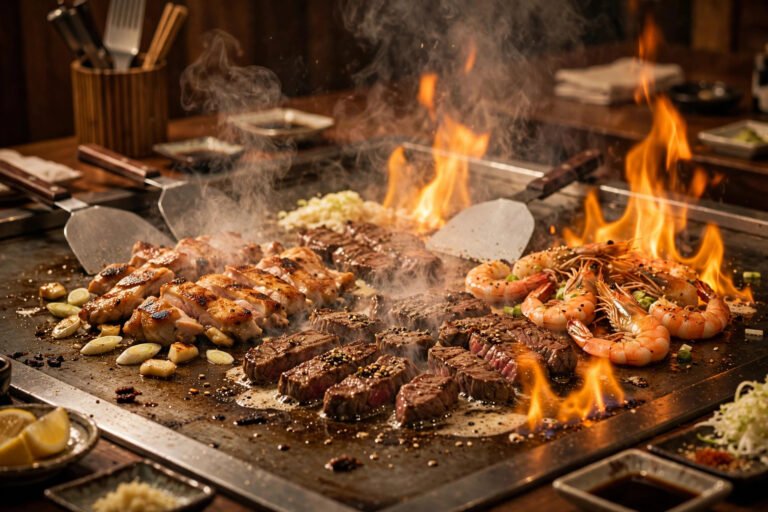
At the same time, the grill is a workplace with real heat and sharp tools. Let the chef lead: do not touch the grill, utensils, or ingredients unless invited, and never reach across the cooking surface. If the chef tosses food your way, it is fine to try to catch it — that is part of the act — but do not be embarrassed if you miss; it happens to everyone. If you have an allergy or dietary restriction, tell your server before cooking starts, not mid-show, so the chef can plan around it. Guests with gluten sensitivity can check the gluten-sensitive menu in advance.
Questions are welcome. Chefs are usually happy to explain a technique or an ingredient between courses. The best moments to chat are during plating or while a course is being served, rather than during the fastest knife work. And a genuine thank-you at the end of the meal is always appreciated.
Tipping at Benihana: What’s Typical
Tipping at Benihana works like tipping at any full-service American restaurant, with one wrinkle: the chef and the server both contribute to your evening, but you tip through the bill as usual. These are typical ranges, not rules — tip what you feel the service deserves.
- Standard service: 18–20% of the pre-tax bill is typical for good service.
- Great experience: 22–25% is a generous thank-you for a memorable chef show and attentive service.
- Large parties: some locations add an automatic gratuity for parties of six or eight or more. Check your bill before adding an extra tip, so you do not tip twice by accident.
- Bar drinks: $1–2 per drink, or 20% of the bar tab, is standard if drinks are ordered separately.
If you are unsure whether gratuity is already included, just ask your server — it is a normal question and nobody minds answering it. For budgeting, remember that Benihana does not publish national prices: typical hibachi entrées run roughly $28 – $50 per person before drinks, tax, and tip, and prices vary by location. See the Benihana prices guide for the full picture.
Kids at the Teppanyaki Table
Children are very welcome at Benihana, and the chef’s show is often the highlight of a family visit. Kids love the onion volcano, the flying shrimp, and watching their dinner appear from a cloud of steam. A few ground rules keep it safe and fun.
First, the grill is extremely hot — keep children seated during cooking and remind them not to touch the grill surface or reach for utensils. Second, the end seats are a good choice for younger kids: close enough to see everything, slightly further from the hottest part of the grill. Third, plan the order: the lunch menu and kids portions are usually the most budget-friendly way to introduce children to Benihana, and a daytime visit is calmer than a packed Saturday evening.
Finally, bring patience for the wait. A full hibachi dinner takes up to two hours, which is a long time for small children. The show fills most of it, but a quiet activity for the gaps between courses is a wise backup.
Phones, Photos and Camera Etiquette
Photos are part of the Benihana experience — the chef show is made to be photographed. A few simple manners keep it enjoyable for the whole table.
- Photos: yes. Flash: no. Flash photography can startle the chef mid-trick and disturb neighboring tables. Natural light and the grill’s own glow photograph beautifully.
- Keep it brief. Snap the volcano and the shrimp toss, then put the phone down and enjoy the meal. A table full of raised phones blocks views and kills the atmosphere.
- Take calls outside. If you must take a call, step away from the table. A phone conversation at a shared grill table is disruptive for seven other diners.
- Ask before filming strangers. Your video will inevitably include other guests at a communal table. A quick “do you mind?” is polite, and never post footage of strangers without their okay.
- Respect the chef’s flow. Do not lean over the grill for a shot or ask the chef to pause mid-performance. The best photos come from your seat, at the moments the chef clearly plays to the audience.
With those basics covered, you are set. Smart casual clothes, on-time arrival, a friendly attitude at a shared table, and a phone that stays mostly in your pocket — that is the whole benihana dress code and etiquette formula. For the practical details of your visit, check the Benihana hours, the hibachi menu, and the sushi and sashimi menu before you go.