The Benihana Teppanyaki Experience (2026): What Actually Happens at the Grill


The Benihana Teppanyaki Experience (2026): What Actually Happens at the Grill
Communal seating, the onion volcano, the shrimp toss and a multi-course meal cooked inches from your plate — here is the full experience, step by step.
The benihana teppanyaki experience is dinner and a show in the most literal sense: your food is cooked inches from your plate, on a flat iron grill, by a chef who flips shrimp into his hat and builds a volcano out of onion rings. If you have never been, it is natural to wonder what actually happens — how the seating works, what order the food arrives in, how long it takes, and whether you need to know anything before you sit down.
This guide walks you through the whole evening, course by course and trick by trick, based on how Benihana’s teppanyaki service actually runs. No surprises, no jargon — just what to expect from the moment you arrive to the moment dessert lands. Prices mentioned are typical ranges only, since Benihana does not publish national prices and prices vary by location.
By the end, you will walk in like a regular: you will know where to sit, what to order, how to talk to your chef, and how to get the most out of one of America’s most distinctive restaurant experiences.
What Teppanyaki Actually Means
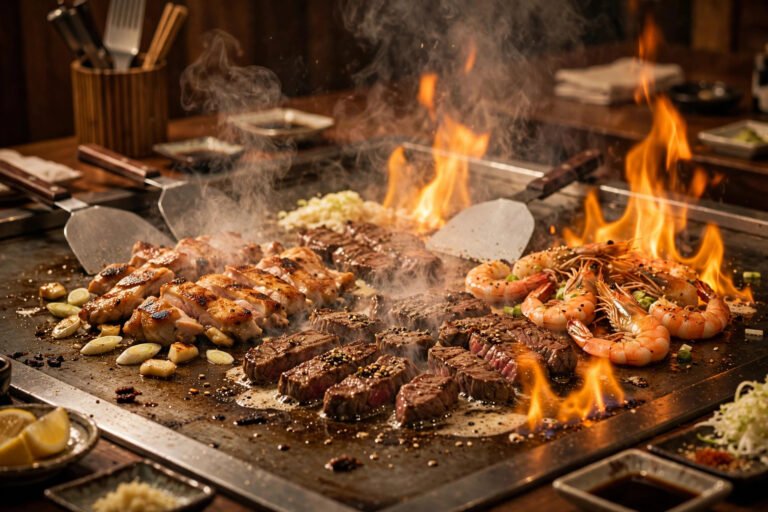
Teppanyaki is a style of Japanese cooking named for its equipment: teppan means iron plate, and yaki means grilled or pan-fried. Food is cooked on a large, flat iron griddle built into the dining table, right in front of the guests. Benihana, founded in New York in 1964, took that idea and turned it into dinner theater — the chef is both cook and performer, and the grill is the stage.
That is the key difference from a normal restaurant meal. At Benihana you do not order food that disappears into a kitchen. You watch every step: the knife work, the flames, the seasoning, the plating. The meal is cooked to order in front of you, which is why it tastes the way it does — hot, fresh, and seasoned exactly as the chef intends.
It also explains the seating. Teppanyaki tables are communal, usually seating eight guests around one grill. You share the table, the show and the chef with strangers, which is part of the experience rather than a drawback — many first-timers say the shared table is what made the night memorable.
Arriving and Getting Seated
Arrive a few minutes early, especially for dinner. Benihana may hold your table only briefly, and late arrivals can be moved to the next grill opening. At the door, you will check in, confirm your party size and any dietary notes, and wait until a full grill group is ready. That wait is normal — the restaurant fills tables of eight, so a half-empty grill means a short delay while more guests arrive.
When your table is called, you will be seated around the griddle with the other guests at your grill. Coats and bags go under the bench or on hooks, and menus are already at the table. Your chef arrives after everyone is seated and orders are taken, so there is usually a few minutes to settle in, order drinks and look over the menu.
Seating tip: if you want the best view of the tricks, sit near the middle of the grill rather than at the ends. And if anyone in your party has an allergy or dietary restriction, tell your server before ordering — not after the chef starts cooking. Benihana offers a gluten-sensitive menu and can usually adapt dishes, but only with advance notice.
The Course Order, Step by Step
A teppanyaki dinner follows a set rhythm. Knowing it in advance means you will not wonder whether the meal is over when it is only just starting — or fill up too early on the wrong course.
| Course | What to expect |
|---|---|
| 1. Japanese onion soup | A light, clear broth with mushrooms and scallions — around 25 calories, and a gentle start. |
| 2. Benihana salad | Crisp greens with the famous creamy ginger dressing, served before the grill heats up. |
| 3. Hibachi shrimp appetizer | Small grilled shrimp, often served with the chef’s first tricks. |
| 4. Hibachi vegetables | Onions, zucchini and mushrooms cooked on the grill — and the source of the onion volcano. |
| 5. Hibachi fried rice | Cooked on the grill in front of you, with egg, vegetables and your choice of protein style. |
| 6. Main entrée | Your hibachi chicken, steak, shrimp, scallops, lobster or combination, cooked to order. |
| 7. Dessert | Often green tea ice cream or tempura cheesecake to finish. |
The whole sequence is deliberate: light to rich, simple to showy. Soup and salad come first so the chef can prep the grill. The shrimp appetizer doubles as the warm-up act. Vegetables and fried rice build anticipation, and the main course arrives when the performance is at its peak. If you want to see the full range of mains before choosing, browse the Benihana hibachi menu ahead of time.
The Show: Onion Volcano, Shrimp Toss and Egg Trick
The tricks are the part everyone asks about, so here is what they actually are. The onion volcano is built from stacked onion rings on the grill: the chef pours oil inside, lights it, and the stack erupts in a column of flame while the chef makes train-whistle sounds. It is brief, loud and genuinely impressive the first time you see it.
The shrimp toss is exactly what it sounds like. The chef flicks cooked shrimp across the grill toward guests, who try to catch them in their mouths. It is optional, it is silly, and it is the moment most tables remember. If you would rather not participate, a smile and a shake of the head is all it takes — nobody is pressured.
The egg trick is the chef’s quiet flex: an egg is rolled, flipped and cracked on the flat of a spatula, sometimes juggled, and usually ends up perfectly in the fried rice. Add in fast knife work, spatula drumming and the occasional flame burst, and you have the show. The tricks are not random — they are timed to the cooking, so the performance never delays your food.
One thing first-timers often miss: the chef is watching the table as much as you are watching him. Laugh, react and applaud, and the show gets better. A quiet table gets a quieter performance.
Your Chef: Part Cook, Part Performer
Benihana chefs train for months to do two jobs at once: cook a multi-course meal to order and entertain eight strangers while doing it. They manage grill temperature, timing and seasoning by feel, and they adjust the show to the table — more tricks for a birthday party, a gentler pace for a family with small children.
Talking to your chef is expected and welcome. Ask how a dish is seasoned, request your steak cooked a particular way, or ask for extra garlic butter — within reason, the chef will accommodate you on the spot. What helps is being specific early: doneness, spice level and allergies should be mentioned before cooking starts, not after your food is plated.
It is also worth knowing that the chef is not your server. Drinks, refills and the bill are handled by your server, who circles the table throughout the meal. If you need something, either will happily flag the other down. And yes, tipping both the server and recognizing the chef’s performance is customary — the show is part of what you came for.
How Long Does the Experience Take?
Plan for 60 to 90 minutes from seating to dessert for a standard teppanyaki dinner. Larger parties, busy nights and extra courses can stretch that toward two hours. The pacing is built into the course order: soup and salad while the grill heats, appetizers and vegetables while the chef warms up, and the main course when everything is at full speed.
The longest waits are usually before you sit down, not during the meal. Weekend evenings can mean a 30–60 minute wait for a table if you walk in without a reservation, which is why booking ahead matters. Once you are seated, the meal moves steadily — the chef cooks for the whole table at once, so nobody’s food sits waiting while someone else’s is prepared.
If you are short on time, lunch is the faster version of the same experience, with a shorter menu and a quicker pace. Our lunch guide and hours guide will help you plan around your schedule.
First-Timer Tips That Actually Help
- Book ahead for dinner. Weekend walk-ins can wait a long time. Use our reservations guide and arrive a few minutes early.
- Order drinks before the show starts. Once the chef begins, you will not want to look away — get drinks and appetizers sorted first.
- Sit mid-grill for the best view. The middle seats see every trick head-on; end seats see the show at an angle.
- Say allergies and preferences up front. Tell your server before ordering, not mid-performance.
- Do not over-order appetizers. The set courses are generous. A full appetizer spread before the grill starts can leave you too full for the main course.
- Bring a camera, but keep it quick. Photos of the onion volcano are a rite of passage — just do not film the whole meal through a screen.
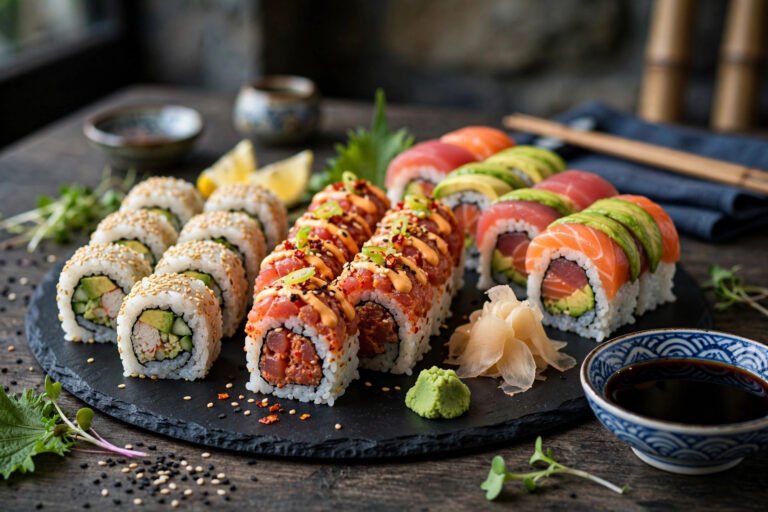
- Check the sushi menu too. If someone at your table does not want hibachi, the sushi menu is a full alternative, and rolls can be ordered alongside the grill.
- Save room for dessert. Green tea ice cream is the classic finish, and tempura cheesecake is the crowd favorite.
What Does the Teppanyaki Experience Cost?
A teppanyaki dinner is a premium restaurant experience, and the price reflects that. Typical hibachi entrées run roughly $25–$50 per person at dinner, with premium items like filet mignon and lobster higher, before drinks, dessert and tip. Lunch versions of the same dishes usually run lower — see our Benihana prices guide for typical ranges by dish.
Ways to keep the cost down without losing the experience: go at lunch, share an appetizer instead of ordering one each, skip the bar and order a soft drink or lemonade, or watch for Benihana coupons and deals before you go. Gift cards are also a smart move for celebrations — see our gift card guide.
Whatever you spend, the teppanyaki experience is one of the few restaurant meals that is genuinely hard to replicate at home. The food is excellent — but it is the grill, the chef and the shared table that people come back for.